"Flowers" by the late artist and writer Joelle Sander.
Sander’s first book, “The Family: The Evolution of Our Oldest Human Institution,” was published in 1978 while she worked as an instructor with the Institute of Children’s Literature. She described the history book, which took young readers on a journey of the evolving family unit from the Ice Age to the 1970s, as a kind of anthropological tour. “Kids are exposed to so many families in this culture,” she told The Lakeville Journal at the time. “I felt the book would give them a perspective on families in other cultures, both historical and contemporary. In 1992, The Lakeville Journal reviewed another of her published works, “Before Their Time: Four Generations of Teenage Mothers,” which Sander wrote as a faculty member at Sarah Lawrence in Westchester County, N.Y., where she served as the associate director of The Center for Continuing Education and taught modern American poetry. She was also a volunteer at a New York YMCA. At this YMCA, she met a young single mother named Leticia, whose trauma, struggles and hopes for the future inspired Sander to share Leticia’s story as told through the personal histories of the women who had come before her. Lakeville Journal writer Richard O’Connor called the book’s psychological exploration of cyclical poverty both “wonderful and disturbing.”
Her first slim volume of poetry, “Margins of Light” was available for attendees of the show to read while they examined Sanders’ paintings, a dual experience to take in the twin passions of her lengthy artistic career.
“Live It Up!” will be on view at The Cornwall Library through Saturday, May 18.
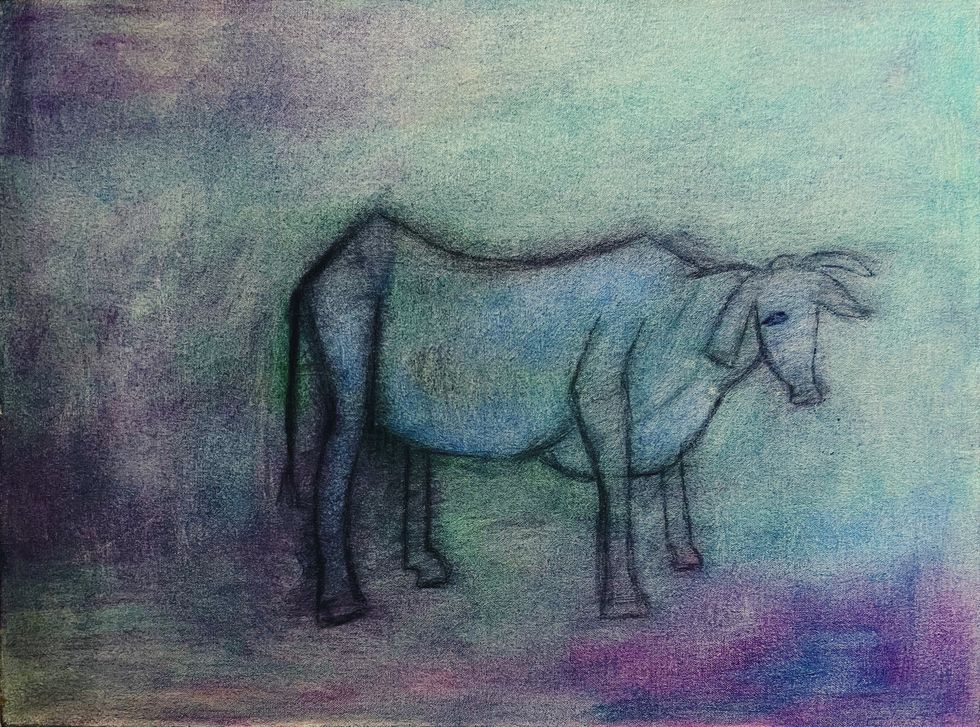 "Cow," by Joelle Sander.Cornwall Library


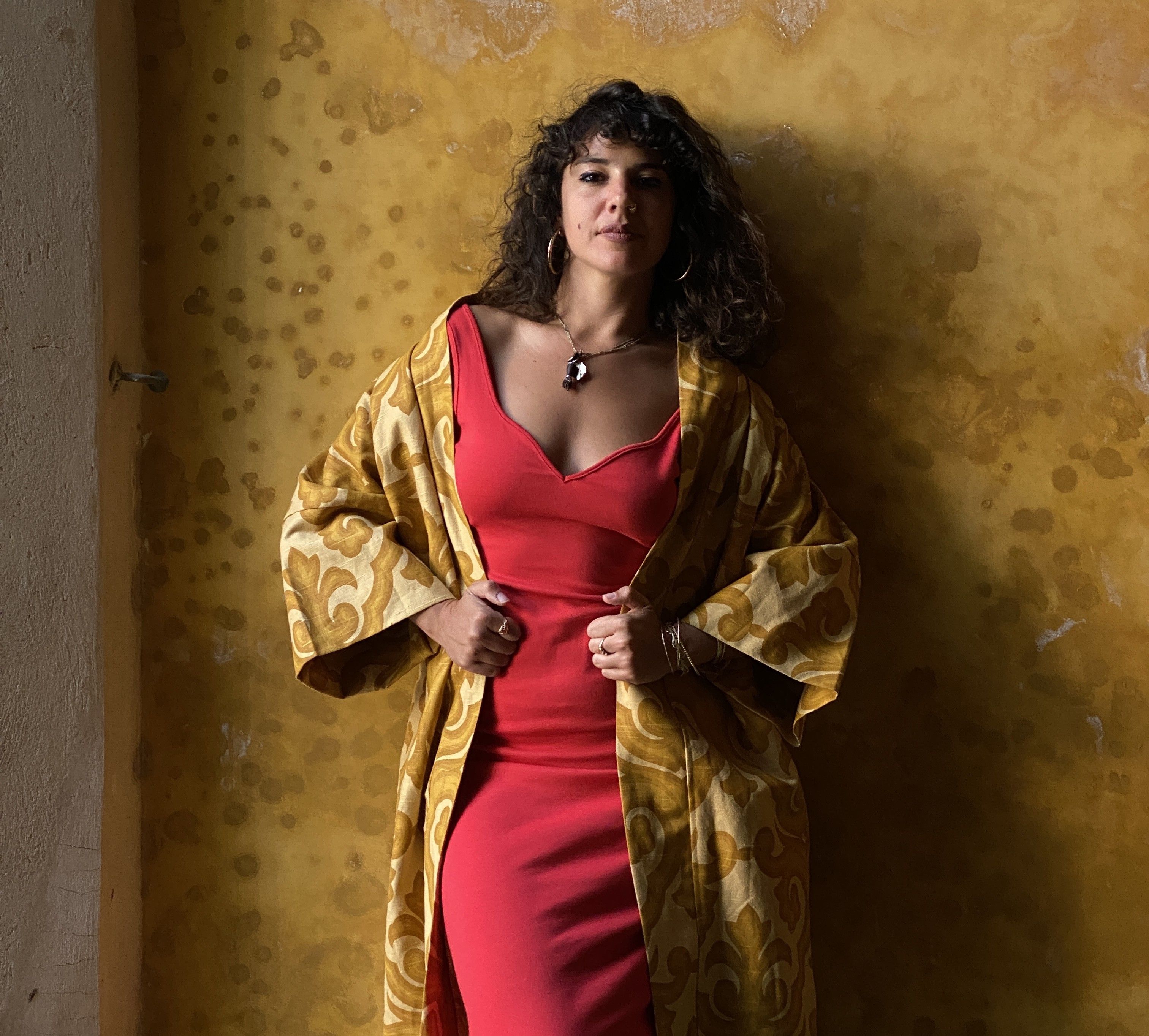 Lala TamarProvided